
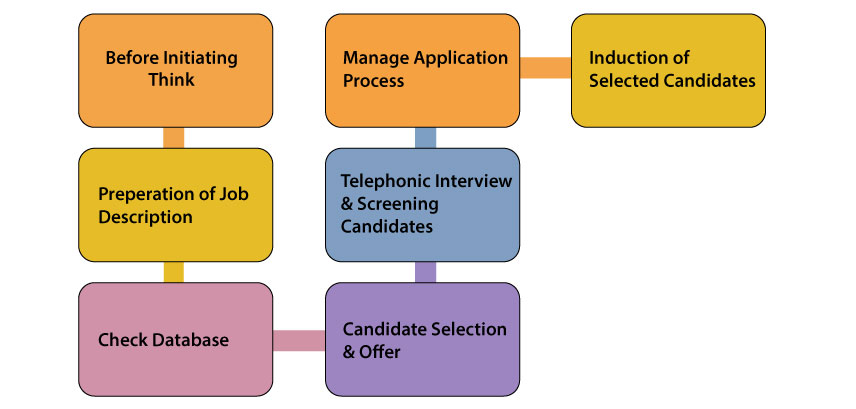
Hiresafe to put together information about the nature of the job, especially it is a position being created for the first time. Think about:
- The content (such as the tasks) making up the job
- The output required by the job holder
- How it fits into the structure of the practice/organization
- The skills and personal attributes needed to perform the role effectively
This analysis forms the basis of a job description and person specification.
An important step is job description which states the necessary and desirable criteria for selection. Increasingly such specifications are based on a set of competencies identified as necessary for the performance of the job & include:
- Skills, aptitude, knowledge and experience
- Qualifications (which should be only those necessary to do the job – unless candidates are recruited on the basis of future potential, for example graduates)
- Personal qualities relevant to the job, such as ability to work as part of a team
Internal methods:
- Staff Referrals
- Succession planning
- Internal Talent Pool
- External methods
- Online recruitment
- Press advertising
- Networking
There are two main formats in which applications are likely to be received: the curriculum vitae (CV)/résumé or application. These can be submitted either on paper or electronically.
Selecting candidates involves two main processes: short listing and assessing applicants to decide who should be made a job offer.
- Shortlisting
Shortlisting depends on the number of candidates. When deciding who to shortlist, it is helpful to draw up a list of criteria using the job specification and person profile. Each application can then be rated according to these standards, or a simple scoring system can be used. - Assessment
A range of different methods can be used to assess candidates. These vary in their reliability as a predictor of performance in the job and in their ease and expense to administer. Typical methods include: . Typical methods include:
- General interview
- Competency based interview
- Role play/demonstration
- Sample presentation (for jobs needing presenting skills)
- Contract
Offers of employment should always be made in writing. But it is important to be aware that an oral offer of employment made in an interview is as legally binding as a letter to the candidate. - References
A recruitment policy should state clearly how references will be used, when in the recruitment process they will be taken up and what kind of references will be necessary (for example, from former employers). These rules should be applied consistently. - Other checks
Checks such as working with children or vulnerable adults, police clearance checks, fit to work checks are necessary according to the job.
Induction is a critical part of the recruitment process, for both employer and new employee. An induction for selected candidates plan should include:
- A clear outline of the job/role requirements
- Orientation (physical) – describing where the facilities are
- Orientation (organizational) – showing how the employee fits into the team, along with details of the organization’s history, culture and values
- Fair Work Information Statement

 +968 24826465
 business@hiresafe.me